
Reading Strategy
"Let Your Light Shine" Matthew 5:14-16
Reading is at the heart of all we do at St Lawrence Primary School. We believe reading is one of the best tools we can give to our children in order to shape them into independent, imaginative and life-long learners. We also believe that children need to be able to read to be successful in all other areas of the curriculum.
We teach reading, both explicitly, and through our wider curriculum; and we ask our parents/carers to support us in this.
Phonics and Early Reading:
Synthetics and Systematic Phonics scheme used: Read Write Inc.
Read-Write Inc mission statement- Ruth Miskin Training:
Read Write Inc. programmes work because we get children’s brain ‘COGS’ working.
Everything CONNECTS: children connect sounds with mnemonic pictures; words with their meanings; and stories with the sounds they know. They connect their own experiences to the stories they read and learn to lift the words off the page.
Children learn ONE thing at a time and practise it until it becomes second nature. Interactive practice keeps children focused, and their capacity to learn develops exponentially.
They learn at their GOLDILOCKS spot (not too easy, not too hard) with others at a similar challenge level. No time is wasted.
Children remember what they learn by SAYING it out loud to a partner. If they can’t explain it, the teacher repeats it until they can.
What’s more, our teachers are trained so they have capacity to show love for what they do. The more they love teaching, the more the children love learning.
Our Phonic Strategy:
- All children in EYFS and Year 1 enrolled as a matter of course. Additional children from upper years enrolled alongside where their learning needs still sit within a phonic programme.
- Children take part in 5x full RWI lessons each week
- Phonic sessions start in EYFS where sounds learning builds up to allow a reading and writing programme to begin and work alongside.
- Sessions in Year 1 onwards comprise of three sections: sounds, reading and Get Writing
- Children are assessed half-termly and grouped accordingly
- Sessions are rigorous, snappy and successful for all
- All children take home books to coincide directly with their level of phonic knowledge
- Children who show a need for additional support are tutored 1:1 during the afternoon sessions. This helps to ensure all children keep up, and don’t have to catch up.
Year 2: Bridging the Gap
In year 2, when children have worked all the way through the RWI scheme and have a secure phonic understanding, they move onto daily guided reading. These sessions support the children’s growing comprehension and continue to support decoding and the reading of high frequency words. Guided reading is underpinned by certain guiding principles, these are outlined below:
- Pupils are organised into reading attainment groups and share a text pitched at their level with appropriate challenge.
- All pupils in the classroom will be accessing narrative, non-fiction and poetry.
- Pupils will receive a daily 30 minute guided reading session and will work with the class teacher.
- The sessions work best if they operate like conversations about books so there is a natural flow of talk about what they are reading.
- During these sessions the pleasure principle of reading is fostered.
- Guided reading is sharply focused on reading for meaning, listening to friends read and talking about books.
- During these sessions, pupils could be ‘reading around the group’, reading in pairs or reading to themselves and the teacher will direct them in these different organisational ways.
In addition to guided reading, the children have a reading book which they take home. This book is matched accurately to their phonic and reading ability and follows the Accelerated Reader levels which are progressive.
Year 3&4: Reading in Lower Key Stage 2
Reading in year 3 and 4 is taught predominantly through guided reading lessons. These lessons are taught four times a week for half an hour a day and include reading aloud, vocabulary teaching and comprehension skills where all of the children access the same text. This time is protected so that children always have a reading lesson on these days.
The lowest 20% of readers and those that are not at age related expectations are of the highest priority. For these children, reading to an adult is prioritised in addition to the guided reading lessons. Children who show a need for ongoing additional support in phonics continue with daily phonics support.
Children choose their own reading book from the Accelerated Reader levelled books and when they have finished reading it, they access a reading quiz online.
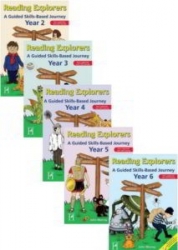
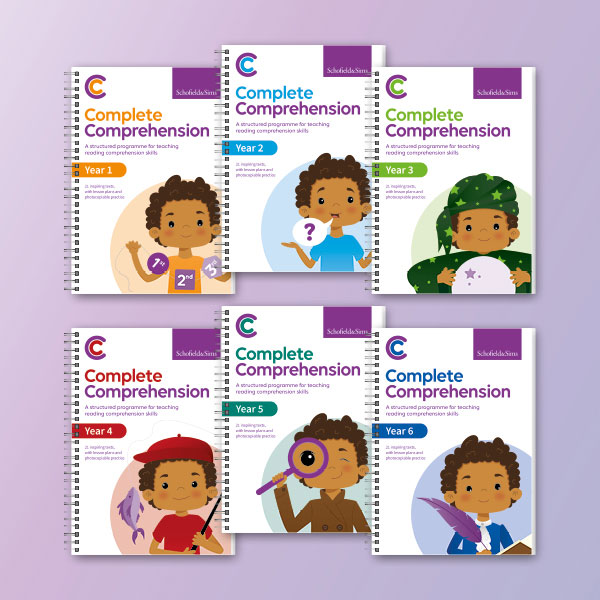
Some of the materials used to aid specific comprehension skills teaching include those in the schemes below.
Year 5&6: Reading in Upper Key Stage 2
In upper key stage 2, we continue to build on the foundations of reading that have been laid lower down the school. Just like lower key stage 2, the children have guided reading lessons four times a week for half an hour a day and include specifically taught reading skills. This time is protected so that children always have a reading lesson on these days.
The lowest 20% of readers and those that are not at age-related expectations continue to be of the highest priority. For these children, reading to an adult is prioritised and this is in addition to the guided reading lessons. Children who show a need for ongoing additional support are tutored in small groups during the afternoon sessions.
Children continue to choose their own reading book from the Accelerated Reader levelled books and when they have finished reading it, they access a reading quiz online.
Reading for Pleasure / Reading at Home
We expect all children to read at home 5x each week and record this in their reading records or planners.
During the school week, there are opportunities for the children to share books with friends, read quietly, read independently and to visit the school library. They are able to choose a book from the library to take home and share with their family and, if they wish, they can complete a book review. Teachers recommend books for the children to read, based on the genres and authors that the children like and the children's interests. The year 5 school librarians help to keep the library a tidy and calm area in school.
Teachers regularly read aloud to the children, modelling fluency, expression and intonation to foster a love of reading.
Each term, a focus author is introduced during an assembly where the children learn about the author's life, what inspired them to become an author and introduce the books they have written. A display is put up in the library, their books are displayed, and the children are encouraged to participate in ticking the displayed list of books on the display to show which books they have enjoyed reading.
Children are encouraged to use the reading shed during playtimes and lunchtimes to enjoy sharing books with their friends.
As well as all of this, at St Lawrence we enjoy celebrating World Book Day each year.
Which books do children take home from school?
KS1
- If a child is engaged in the RWI system, they will be provided with a phonics-appropriate book to come home with and practice reading independently
- Once children finish the RWI system, they begin to choose a 'quiz book' which are closely matched to the child’s reading ability and should be independently decodable
- Children in KS1 also get a choice of a non-phonics book from the school library – these are the picture and non-fiction books that are enjoyable and match our children’s interests. Children visit the school library once a week to change their books and enjoy reading books with their friends.
KS2
- For children still enrolled in RWI system, a RWI phonics-matched book will be provided
- For all other children, a 'quiz book is chosen and taken home. These closely match the child’s reading ability and should be independently decodable.
- All children are assessed once each term using our school assessment system.
- Children in KS2 also get a choice of a book from the school library – these are the fiction and non-fiction books that are enjoyable and match our children’s interests. Children visit the school library once a week to change their books and enjoy reading books with their friends.
Read, Write Inc
To teach phonics, we use the Read Write Inc programme.
Useful documents and advice can be found below. Please click on the link below to access the Ruth Miskin parents' site, which has lots of useful resources and videos:
This document gives parents information about the teaching sequence for the RWI sounds. You can also find a copy of the handwriting cards we use.
Other useful RWI Information:
Fred games you could try at home